

Botox, hyaluronic acid, mesotherapy and other non-surgical options for a more youthful appearance…have entered our lives for years thanks to the immediate aesthetic result and the immediate return to daily activities that they ensure.
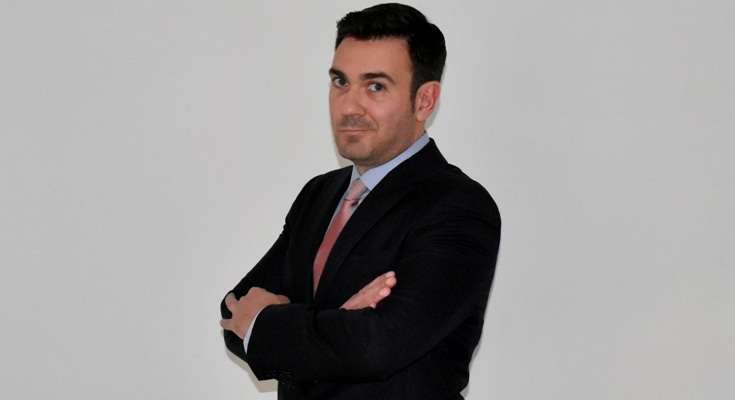
Plastic surgeon Konstantinos Spiliopoulos, PhD from the Athens Medical School, presents the contribution of non-invasive techniques in anti-aging, the factors that will lead us to a safe, perfect, successful non-surgical application and the benefits of the latest generation of injectable materials.
Can non-invasive techniques delay aging?
In recent years, we have studied the aging process intensively and have come to understand that it is a combination of factors and not a simple decline of tissues. Non-invasive techniques can delay the signs but also the aging process itself. There are techniques such as PRP (Platelet Rich Plasma) or stem cell isolation that activate repair mechanisms and literally slow down aging. But also simpler techniques, such as a simple hyaluronic, for example, that address a specific manifestation of aging, which is volume loss.
Are there cases where non-invasive techniques can even replace plastic surgery?
In the past, even for minor cosmetic problems, such as a small bump on the bridge of the nose, surgery was the only option. Today, by playing with volumes and light shading, we can camouflage such problems using injectable products. In addition, the great progress in the field of lasers has given us the ability to improve the quality and complexion of the skin that even surgery could not achieve.
What do we need to keep in mind for a safe, complete and successful non-surgical application?
Perhaps the most important word is trust in the doctor who performs the application. There must be appropriate training and experience because complications even with injectable products can be devastating. It goes without saying that the products must be approved and certified. This may also mean a higher price. The most certain thing is that we should not choose with the price as the first and only criterion because in this way we often become participants in the occurrence of adverse reactions.
Are there risks from the “abuse” of injectable applications, e.g. the very frequent repetition of Botox? What are the limits that you set as a plastic surgeon?
As with any abuse, there are risks with injectable products. For example, the abuse of toxins (Botox, etc.) can lead to the creation of antibodies or total muscle atrophy. The abuse of chemical peels or lasers can lead to thinning of the skin, etc. The limits in each case are individualized, so we cannot generalize, we simply urge you to follow the instructions of the doctor you trust.
What is your philosophy on exaggerations, especially when it comes to young ages? (e.g., puffy lips even in minors).
Very often people comment on exaggerations. However, any exaggeration is a personal matter and in any case, as long as it does not pose a health risk, it has no objective criteria. I want to say that “exaggeration” for one person is “normal” for another. Even doctors from different regions, e.g. Latin America compared to Europe, disagree on what is too much or too little, big or small. Of course, many times I and my colleagues have found ourselves in the position of disagreeing with a candidate, but there will be another doctor who will do so simply because he will have a different aesthetic criterion. The Hippocratic “do good or do no harm” should be our medical limit.
What do the latest generation of injectables promise us? What are their benefits in terms of aesthetic results, naturalness, and durability?
The latest generations of injectables are clearly increasingly safer for our bodies and the products are acquiring special specifications for use in almost all parts of the body. The new materials have greater elasticity in areas with high mobility, such as the lips, giving a more natural result. The same applies to dark circles or even to the products we use to emphasize a part of the body, such as the buttocks. The products that are still in clinical trials promise total regeneration of tissues that have deteriorated due to age or even trauma.
Source : aestheticsurgery.com

